

Design and Construction Report staff writer
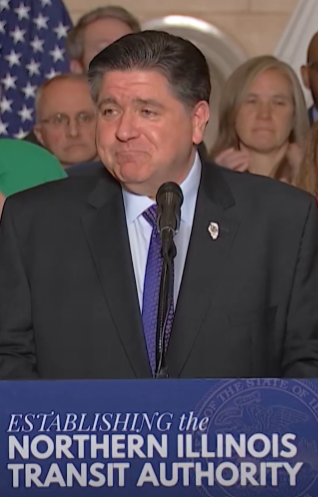
Illinois’ governor has signed legislation creating a new Northern Illinois Transit Authority, a major restructuring of how public transportation is governed and funded in Illinois, aimed at stabilizing transit systems without raising statewide taxes.
The Northern Illinois Transit Authority Act, Senate Bill 2111, establishes a regional authority with expanded power over service planning, capital projects, fare collection and operations for the Chicago Transit Authority, Metra and Pace. Supporters say the law addresses a looming fiscal cliff that threatened the long-term reliability of transit across the region.
The measure also directs significant new investment into public transit, capital projects and tollways statewide. Better transit service is expected to expand access to jobs, reduce congestion and improve air quality, while supporting economic growth. Argonne National Laboratory estimates that every dollar invested in transit generates about $13 in economic activity.
“Today’s signing of the Northern Illinois Transit Authority Act is a major victory for working families and the entire state of Illinois,” said Mike Macellaio, president of the Chicago and Cook County Building Trades. He said the law strengthens accountability and will create thousands of union construction jobs tied to building and modernizing transit, roads and stations across Chicago, Cook County and downstate Illinois.
The law provides about $1.5 billion a year in ongoing transit and infrastructure funding without creating new broad-based statewide taxes. Instead, it relies on redirecting existing revenue and authorizing limited regional tax changes.
Among the funding sources, a portion of the existing state sales tax on gasoline will now be dedicated to transit, generating an estimated $860 million annually for operations. The legislation also allows the Regional Transportation Authority to increase the regional sales tax by up to 0.25% within the six-county NITA area, raising about $478 million a year. In addition, 90% of interest earnings from the Road Fund and State Construction Account Fund will be directed to northeastern Illinois transit capital projects, with 10% allocated to downstate communities, for roughly $200 million annually. The law also includes provisions to support a new Illinois Tollway capital program.
“Today’s bill signing isn’t just about keeping our buses and trains running, it’s about protecting the people who keep our entire transit system moving,” said Brian Shanahan, railroad coordinator for the Machinists International. He said the measure reflects unprecedented unity across rail unions and credited Illinois AFL-CIO President Tim Drea for helping ensure transit workers’ voices were heard.
The act also includes provisions aimed at improving service and coordination across Illinois. It calls for enhanced suburban service through better coordination between Metra and Pace, a new regional Dial-a-Ride program, and Metra’s regional rail model to expand on-demand and suburb-to-suburb service, particularly for seniors and riders with disabilities.
Downstate transit systems will receive about $150 million annually under the law, helping stabilize operations and support capital projects. The legislation also reduces the local cost-share requirement for transit projects from 35% to 20%, a change supporters say will make it easier for smaller communities to maintain and improve service.

